
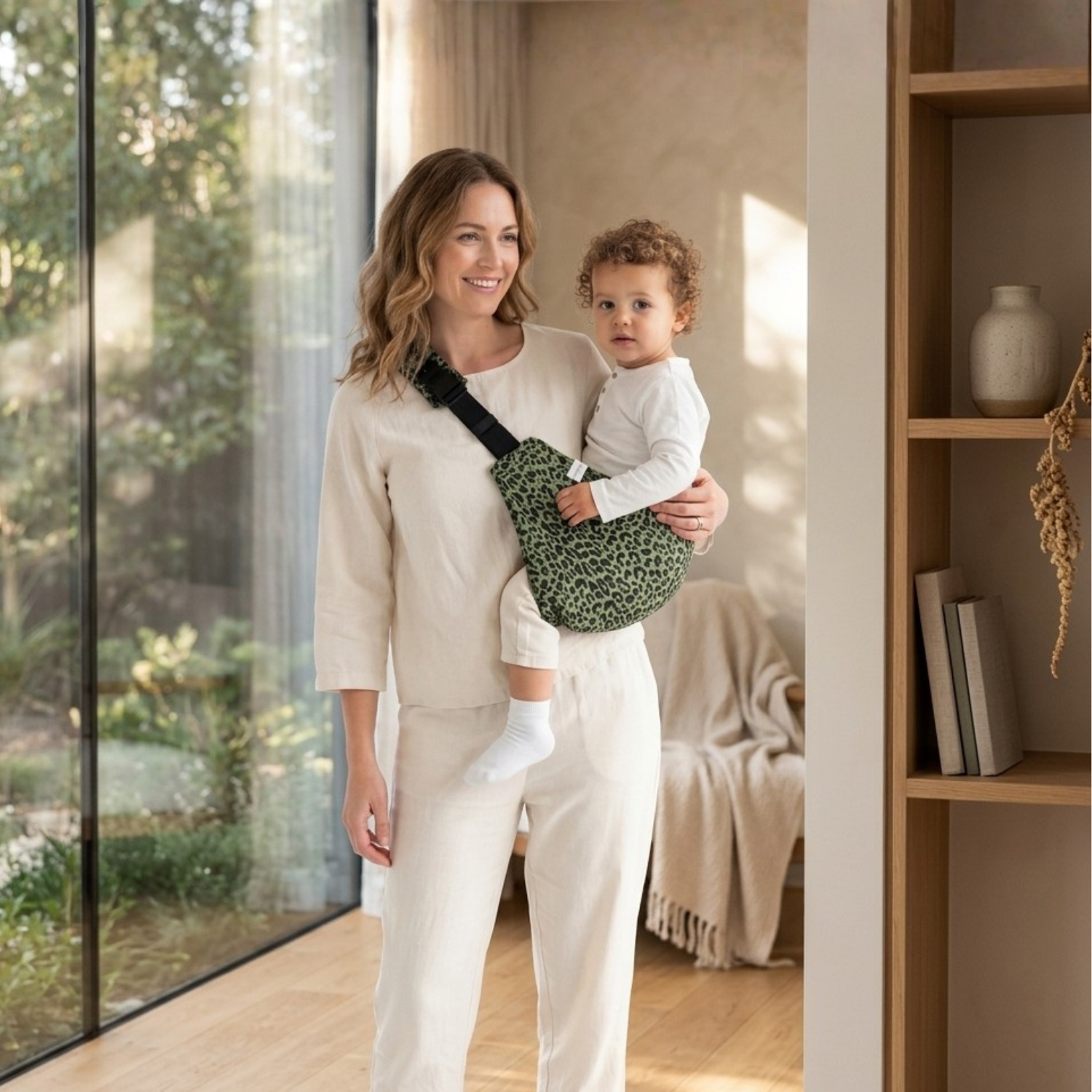
The quiet power of staying close
In the early days of parenthood, it’s easy to wonder whether you’re doing enough.
There’s advice everywhere, routines to follow, milestones to reach, methods to try. Yet some of the most meaningful support you can offer your baby doesn’t come from a checklist.
It comes from closeness.
Holding your baby, carrying them, responding to their cues, and simply being near are small actions that quietly shape how they experience the world.
And in those early months, the world feels safest when it feels close to you.
Closeness builds emotional security
Babies are born expecting connection.
Your voice, your scent, your heartbeat, these familiar signals help them regulate their emotions and feel safe. When a baby experiences consistent closeness, they begin to develop a sense of trust that their needs will be met.
This emotional security becomes a foundation for confidence as they grow.
It doesn’t mean being present every second. It means creating enough moments of connection that your baby learns the world is responsive and supportive.
Supporting brain development through connection
Early development is shaped through relationships.
Each cuddle, gentle interaction, and responsive moment contributes to neural pathways linked to emotional regulation, communication and social understanding.
Closeness isn’t separate from development, it’s part of it.
Through shared moments, babies learn patterns of comfort, rhythm and interaction that support their growing brain in subtle but powerful ways.
Closeness supports calm for both of you
Parents often notice something simple: when baby is close, things feel easier.
Many babies settle more readily when held or carried, and parents frequently describe feeling more confident when they can read their baby’s cues up close.
Closeness becomes a shared calm, not just for baby, but for you as well.
And that calm can change how everyday moments feel.
Connection in everyday life
Closeness doesn’t require special activities.
It lives inside ordinary moments:
- A walk around the neighbourhood
- Folding washing while your baby rests against you
- A quiet pause before nap time
- Gentle movement while you talk to them
These are not small moments. They are the moments where connection grows naturally.
Finding your own rhythm
Every parent–baby relationship is unique.
Some days feel easy. Others feel uncertain. Closeness is not about perfection or constant contact, it’s about creating opportunities for connection within your own rhythm.
Trusting those instincts to hold, respond and stay near is often enough.
Because development doesn’t only happen through structured activities.
It happens through relationship.
A gentle reminder
If you’re spending time holding your baby, comforting them, talking to them, or keeping them close while you move through your day, you’re already supporting their growth.
Not through effort alone, but through presence.
And in early childhood, presence matters more than we often realise.
Keeping them close, without the sore arm
30% off automatically applied, plus a free Storage Pouch with your carrier.
Shop the Carrier

Leave a comment
This site is protected by hCaptcha and the hCaptcha Privacy Policy and Terms of Service apply.